
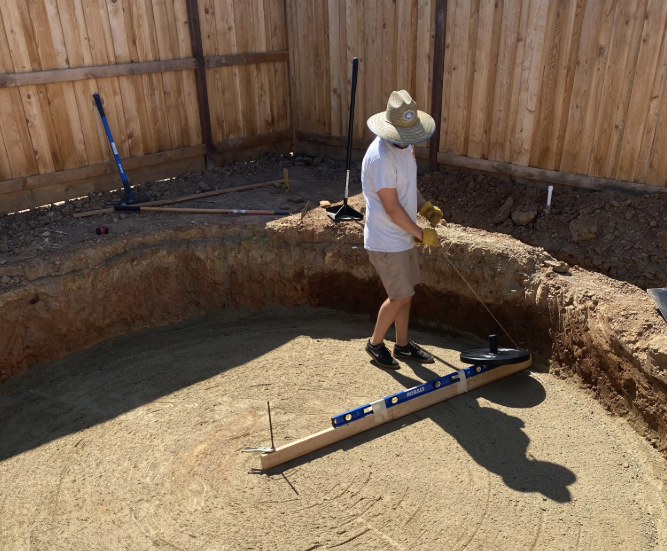
What Kind of Soil Base Do You Need for a Plunge Pool?
The right soil base for a plunge pool needs to be firm, level, stable and able to support the combined weight of the pool and water.
For an Outback Plunge Pool, the supporting ground should have a minimum bearing capacity of 70 kPa, with the pool installed on a suitable prepared base such as compacted crushed rock with a concrete slab, or an engineered slab or support system for more difficult sites.
That might sound technical, but the basic idea is simple: your plunge pool needs a solid foundation that will not move, sink or hold water underneath the shell.
Here is what Australian homeowners should know before preparing their site.
Why Does the Soil Under a Plunge Pool Matter?
A plunge pool may be compact, but once filled, it carries several tonnes of water.
Depending on its size, a plunge pool can hold thousands of litres. That weight needs to be spread evenly across a stable base. If the ground underneath settles unevenly, shifts after rain or has poor drainage, it can place unnecessary stress on the pool structure.
Outback specifies that its pools should sit on an even, well-drained surface. An uneven base may also allow water to collect beneath the pool, which can contribute to corrosion over time.
Before thinking about decking, landscaping or pool finishes, it pays to get the ground beneath the pool right.
How Firm Does the Ground Need to Be?
For an Outback Plunge Pool, the base needs to be supported by natural, firm ground with a minimum bearing capacity of 70 kPa.
Bearing capacity refers to how much load the soil can support without excessive movement or settlement.
Firm natural ground may already be suitable on some properties. On others, particularly sites with fill, soft soil, clay, sand or a noticeable slope, extra preparation may be required.
A builder, landscaper or engineer can assess the site and confirm whether the existing ground is suitable before the base is constructed.
What Base Goes on Top of the Soil?
The soil itself generally is not the finished surface that the plunge pool sits on.
Outback identifies two common base approaches.
Compacted crushed rock and concrete slab
A compacted crushed rock base with a minimum 100 mm SL72 concrete slab can suit many installations.
Engineered slab or support system
More difficult sites, including sloping properties, may need an engineered concrete slab or tank stand designed for the conditions of the property.
The finished base should also extend at least 200 mm beyond the edge of the pool to provide suitable support.
The exact preparation can vary depending on whether the pool will sit above ground, partially in the ground or fully in ground.
Can You Put a Plunge Pool on Clay Soil?
A plunge pool can be installed on a property with clay soil, but clay deserves extra attention during site preparation.
Clay can retain water and expand or contract as moisture levels change. That movement can make a poorly prepared base less stable.
Outback notes that soil type affects base preparation and identifies clay as a soil that can hold water and expand. Where there is uncertainty about the site classification, homeowners should refer to the relevant engineering information or speak with a qualified builder or engineer.
Drainage around the pool is especially important on clay sites. Water should be directed away rather than allowed to sit beneath or against the structure.
Can You Put a Plunge Pool on Sandy Soil?
Sandy ground presents a different challenge.
It usually drains more quickly than clay, but it may also move or lose stability if it is not properly prepared.
Simply placing a plunge pool on loose sand is not suitable. The site may require excavation, compaction and a properly constructed slab or engineered support before the pool is installed.
What About Filled or Soft Ground?
Fill is soil or other material that has previously been brought onto a site rather than naturally occurring ground.
Depending on how it was placed and compacted, fill may settle over time. That makes it important to know what is beneath your proposed pool location.
Outback’s requirements call for the supporting structure to be founded on natural, firm soil with the required bearing capacity.
Where ground conditions are uncertain, professional site advice can help determine what work is needed before construction begins.
Do not assume a flat-looking patch of lawn is automatically suitable for a plunge pool.
What Base Do You Need for an Above-Ground Plunge Pool?
Above-ground plunge pools can reduce the need for major excavation, but they still need a flat and structurally suitable site.
Outback states that above-ground installations commonly use a concrete slab or compacted base on level ground.
For many homeowners, this can make site preparation simpler, particularly on flat blocks with good access and suitable soil.
You should still check the base specifications for the model being installed before any ground preparation starts.
What If Your Backyard Is Sloping?
A sloping backyard does not necessarily rule out a plunge pool.
On a mild slope, part of the site may be excavated and retained to create a level area suitable for a concrete slab.
On steeper sites or where the pool needs to sit above the natural ground level, an engineered steel frame or tank stand may be required.
Structural engineering advice is generally recommended for more complex sloping-site installations.
Does an In-Ground Plunge Pool Need a Different Base?
Yes. An in-ground installation has additional site preparation requirements.
For Outback in-ground installations, the excavation should allow approximately 300 mm beyond the plunge pool dimensions, as well as enough depth for the required compacted road base or concrete slab.
The ground below must still meet the minimum 70 kPa bearing capacity requirement.
Backfilling also needs to be completed correctly. Outback specifies dry cement-stabilised sand for in-ground backfill, with the required mix based on its installation and engineering documentation.
Following the manufacturer’s current installation plans and engineering requirements is important for this type of installation.
Good Drainage Is Just as Important as Firm Soil
A strong base is only part of the job. Water also needs somewhere to go.
Rainfall, irrigation and surface water should not pool underneath or around the plunge pool.
Outback specifies that its pools should sit on a well-drained surface. Its installation guidance also calls for damp soil to be kept approximately 20 to 30 cm away from the pool exterior using an appropriate retaining solution where required.
Planning drainage before the pool arrives can help protect both the base and the pool structure.
How Do You Know What Base Your Backyard Needs?
Start by looking at the property itself.
Is the proposed location flat? Does water collect there after rain? Has the area previously been filled? Is the soil sandy, clay-heavy or particularly soft? Is the pool going above ground or in ground?
These details help determine whether a standard base is suitable or whether additional earthworks or engineering are required.
For an Outback Plunge Pool, the goal is a level, stable and well-drained foundation supported by ground capable of handling the load.
Plan Your Plunge Pool Base Before Installation Day
The best time to think about soil and base preparation is before your plunge pool arrives.
Getting the foundation right from the beginning can make installation easier and give your pool the stable support it needs for years of backyard use.
Outback Plunge Pools can suit a range of Australian backyards, including flat, sloping, above-ground and in-ground settings, but the correct base depends on the property and installation type.
Thinking about adding a plunge pool to your backyard? Speak with Outback Plunge Pools about your site, ground conditions and preferred installation so you can understand the base requirements before work begins.

