

Getting the base right is one of the most important steps before your Outback Plunge Pool arrives. The base supports the full weight of your pool and water, so it needs to be level, stable and built to spec.

What Type of Base Do I Need?
In most cases, one of two base options is suitable:
- Compacted crushed rock base with a minimum 100mm SL72 concrete slab
- Engineered concrete slab or tank stand for complex or sloping sites
The pool base must be supported by natural, firm soil with a minimum bearing capacity of 70 kPa. All bases must extend at least 200mm beyond the pool’s edge for stability.
Your landscaper or builder will be able to organise, engineer and certify the best option for your site.
Does the Base Differ by Installation Type?
Yes. Outback pools can be installed three ways, and the base preparation varies:
- Above ground — concrete slab or compacted crushed rock on level ground. The simplest and most common option.
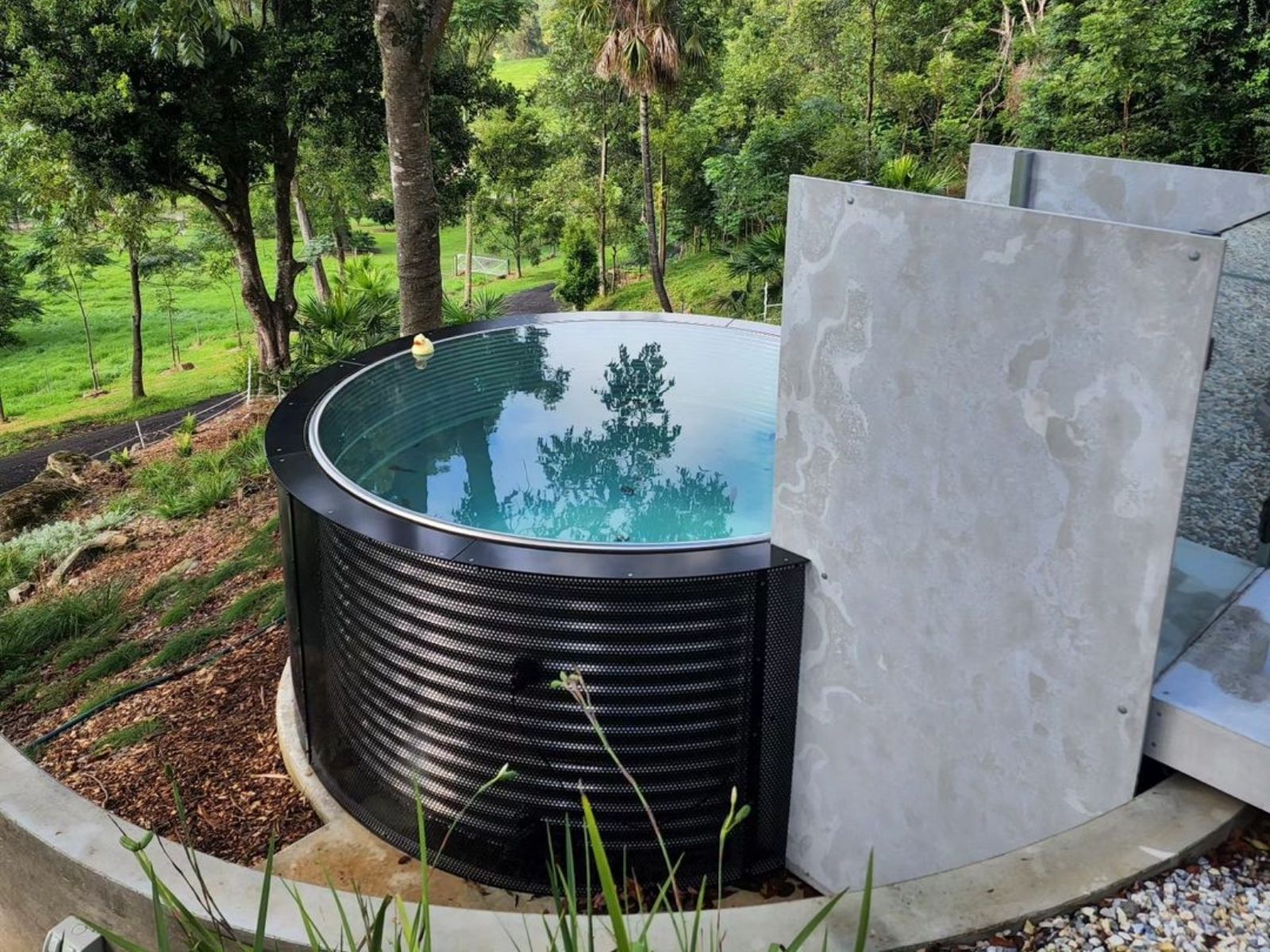
- In-ground (partial or full) — requires excavation and an engineered base. Backfill in 300mm layers, compacting each to avoid voids. Ensure backfill creates a 30-degree slope away from the pool shell.
- Sloping sites — may require an engineered tank stand. Some homeowners commission a structural engineer for this.
What About Soil Type?
Different soil types affect base preparation. Clay soils hold water and can expand, while sandy soils drain fast but may shift. If you’re unsure about your soil classification, consult the engineering documentation or your local builder before preparing the base.
Do I Need to Keep Soil Away from the Pool?
Yes. Because Outback pools are designed to be fully relocatable, a retaining wall or similar structure is needed to keep damp soil 20-30cm away from the pool exterior. This protects the shell and maintains the warranty.
Detailed base preparation instructions, including engineering documentation for your builder or certifier, are available in the installation section of the website. For equipment base requirements, see our equipment base FAQ.

